-
Kutchina service center, Beleghata, Kolkata, WB-700010
Kutchina service center, Beleghata, Kolkata, WB-700010
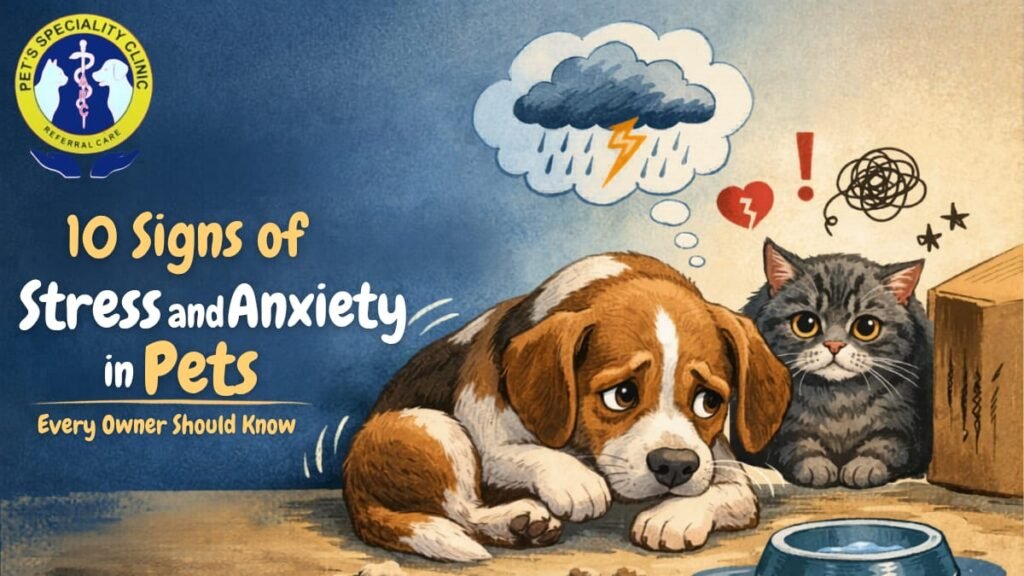
Pets are more than just animals; they are beloved companions and cherished members of our families. Just like humans, pets can also experience stress and anxiety due to changes in their environment, health issues, loneliness, loud noises, or fear. Many pet owners often fail to recognize the early signs of stress in their pets, which can eventually affect their physical and emotional health. Visiting a trusted veterinary clinic in Kolkata can help identify these problems early and ensure proper treatment and care for your furry companion.
Understanding your pet’s behavior is extremely important because stress and anxiety can lead to serious health concerns if ignored for a long time. No matter if you have a dog, cat, or any other pet, understanding their behavior is essential for their health and well-being; learning the warning signs can help you take better care of them and improve their overall well-being.
Pets can become stressed for several reasons. Some causes may seem minor to humans but can deeply affect animals. Common triggers include:
If your pet suddenly behaves differently, consulting a veterinary clinic in Kolkata can help determine whether the issue is behavioral or related to an underlying medical condition.
One of the most common signs of stress in pets is excessive vocalization. Dogs may bark continuously, while cats may meow more than usual. This behavior often happens when pets feel anxious, lonely, or uncomfortable.
If your pet suddenly becomes more vocal without any obvious reason, it may indicate emotional distress or discomfort that requires professional attention.

Stress and anxiety can directly affect your pet’s eating habits. Some pets may completely stop eating, while others may eat significantly less than usual.
A temporary loss of appetite may not always be serious, but if it continues for more than a day or two, it is important to visit a veterinary clinic in Kolkata to rule out health issues and identify the root cause.
A normally calm and friendly pet may suddenly become aggressive when stressed. They may growl, bite, scratch, or react negatively to people and other animals.
Aggression is often a defense mechanism caused by fear, anxiety, or pain. Punishing your pet for such behavior may worsen the situation. Instead, understanding the cause and seeking professional guidance can help manage the issue effectively.

Pets often lick themselves as part of normal grooming, but excessive licking can indicate stress and anxiety. Dogs may lick their paws repeatedly, while cats may over-groom certain areas, causing hair loss or skin irritation.
This repetitive behavior acts as a coping mechanism for emotional discomfort. If you notice such symptoms, a veterinarian can help determine whether the problem is behavioral or medical.
A stressed pet may isolate itself and avoid interaction with family members or other pets. Cats often hide under beds or furniture, while dogs may avoid eye contact and prefer staying alone.
Sudden withdrawal from social activities is a sign that something may be bothering your pet emotionally or physically. A visit to a veterinary clinic in Kolkata can help identify the reason behind this behavior.
Chewing furniture, scratching walls, digging excessively, or destroying household items are common stress-related behaviors in pets.
Destructive behavior often happens when pets experience:
Providing toys, exercise, and attention can help reduce these symptoms, but persistent behavior should be evaluated by a veterinarian or pet behavior expert.
An anxious pet may struggle to relax and may continuously walk around the house without any clear reason. Pacing is commonly seen during thunderstorms, fireworks, or when pets are left alone for long periods.
Restlessness can also indicate pain or discomfort. For this reason, it is always recommended to consult a professional if the behavior becomes frequent or severe.
Shaking and trembling are often associated with fear and anxiety in pets. Loud noises, unfamiliar environments, or traumatic experiences can trigger this reaction.
While occasional trembling may not be serious, persistent shaking could also indicate illness or pain. Professional evaluation is important to ensure your pet’s health and comfort.
Stress can disturb your pet’s sleep cycle. Some pets may sleep excessively, while others may struggle to rest properly and appear restless at night.
Changes in sleeping habits often reflect emotional imbalance, discomfort, or health problems. Monitoring your pet’s daily routine can help identify these signs early.
Stress and anxiety can sometimes lead to unusual hair shedding in pets. While shedding is natural, sudden or excessive hair loss may indicate emotional distress or skin-related health conditions.
Proper nutrition, grooming, and regular veterinary checkups can help maintain your pet’s coat health and overall well-being.
Managing stress in pets requires patience, understanding, and proper care. Here are some effective ways to help your pet feel more comfortable and secure:
Pets feel safer when they follow a regular schedule for meals, walks, and sleep.
Physical activity helps reduce stress and improves mental stimulation.
Allow your pet to have a quiet and comfortable area where they can relax peacefully.
Attention and affection from owners can greatly reduce anxiety in pets.
Reward calm and good behavior instead of punishing fearful behavior.
Regular health examinations at a veterinary clinic in Kolkata can help detect medical issues that may contribute to stress and anxiety.
Many pet owners ignore behavioral changes, assuming they are temporary. However, prolonged stress can weaken your pet’s immune system and negatively impact their health.
You should seek professional help if:
An experienced veterinary clinic in Kolkata can evaluate your pet’s condition, identify the root cause, and recommend the right treatment or behavioral support.
Stress and anxiety are common in pets, but they should never be ignored. Early recognition of symptoms can help prevent serious emotional and physical health problems. Pets communicate their discomfort through behavioral changes, and understanding these signs is essential for every responsible pet owner.
Providing proper care, attention, a healthy environment, and regular veterinary visits can make a significant difference in your pet’s happiness and quality of life. If you notice unusual behavior in your pet, visiting a reliable veterinary clinic in Kolkata can help ensure they receive the care and support they need to stay healthy and stress-free.